

- May 25, 2025
- By: admin
- in: Straw Reaper
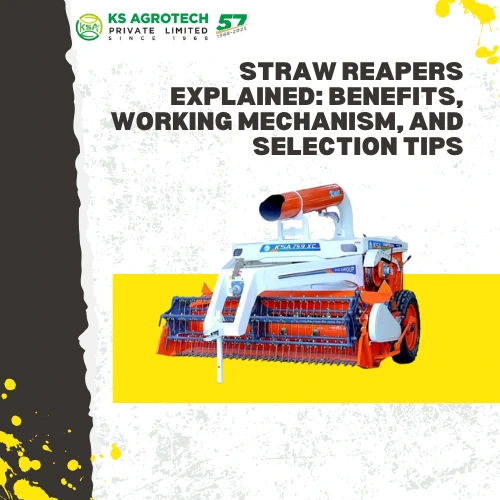
Agriculture is rapidly changing in the current times and farmers are rapidly embracing innovative machine works in order to enhance efficiency and sustainability. The straw reaper is one of such necessities. The machine is used widely after harvesting of crops in the combine and it assists the farmers to clear the remains of the crops as well as provide space to the farmers in preparation for the following sowing cycle. This step-by-step tutorial will cover the definition of a straw reaper, how it works, the main advantages of a straw reaper, and the best tips to select the model that fits your farm.
A straw reaper is a farming device that gathers, cuts, and removes all the remaining straw after harvesting by a combine harvester such as wheat or paddy. Rather than burning crop residue (which destroys soil health and the environment), the straw reaper turns waste straw into fodder to use or spreads it all over the field.
The machine is important in the management of the residues and this is mainly in areas with high farming activities and where rapid preparation of the fields is required.
Straw reapers are not only devices that save time. They help to make agriculture very productive and responsible.
Loose straw and stubble are left to scatter about the field after combine harvesting. A straw reaper is a good way of picking this residue, which makes the field clean and more favorable to the following soil.
Farmers prevent open-field burning, thus preventing loss of soil nutrients and soil microbial life. Management of residues also minimizes air pollution as well as promotes sustainable farm management.
Waste Straw can be used as livestock fodder, which is a positive development because the material can be reused. This is particularly advantageous to dairy as well as mixed-farming businesses.
Straw collection is laborious and slow in terms of the manual method. The same job is achieved in a much shorter time by a straw reaper hence cutting down on the reliance on manual labor at peak seasons.
Knowledge of the working of a straw reaper will assist farmers in operating it more effectively and keep it in better condition.
The machine has spinning blades that slice standing stubble near the ground. The blades will have uniform cutting designs that do not damage the soil.
The straw is cut and through a conveyor system, the straw is directed to the cleaning chamber. This also allows the flow of materials to be smooth and reduces blockages to be reduced.
The machine has sieves and blowers (located inside the machine) that separate chaff, dust, and fines. The cleaned straw is either gathered or thrown out evenly on the field.
The majority of the straw reapers are made to work on a tractor PTO (Power Take-Off), and are compatible with popular tractors.
Straw reaper users tend to benefit both in the short term and in the long term.
The rapid clearing of the residue gives time to plant the next crop in time, which is important in keeping the yield cycles required.
Although farmers often inquire about the Straw reaper price before purchase, the long-term savings in labor, time, and fodder costs make it a financially sound investment.
The straw reaper is used to assist farmers in meeting the guidelines provided by the environment by lessening the burning of stubble and air pollution.
The end effect of clean fields is on seed placement, germination, and even crop development.
When choosing the appropriate straw reaper, there are several factors to be considered that will provide the best performance of the selected reaper.
Big farms can use heavy duty straw reapers with a larger capacity whereas small farms can use compact devices. The kind of crop, wheat or paddy also affects the blade design and the strength of the machine.
Do not forget to check the horsepower requirement and compatibility with PTO as there can be performance problems or mechanical stress.
Search for a durable construction, quality of blades and strong bearings. A long lasting machine will save on maintenance and will also have a longer working life.
Select suppliers who provide easy accessibility of spare parts and technical assistance. Reliable engineering and farmer-centric solutions are provided by trusted brands such as KS Agrotech Pvt. Ltd.
Farmers often compare Straw reaper price in Punjab due to the region’s high adoption rate and competitive market, making it easier to evaluate value-for-money options.
Maintenance leads to a steady output and increases the life of the machine.
Basic care regimes can also drastically give in to the downtime during the time of year of critical farming.
Straw reapers have become a necessity in the contemporary agricultural sector and they provide an effective, green, and affordable way of dealing with residual harvest. Through the performance of their working mechanism, benefits and selection criteria, farmers will be able to make informed choices that will enhance productivity and sustainability. The right straw reaper is not only an easy way of preparing a field, but it also promotes agricultural development in the long term and safeguards the environment.