- March 26, 2026
- By: admin
- in: Updates
Having one of the most important stages in agricultural cycle, rice harvesting is one of the most important processes. The work put in the growing season cannot bear fruits unless the recovery of grain in harvest is the most. Minor inefficiencies at this level can lead to very huge losses in yield. The field of farmers can make great advances in terms of grains recovery and total earnings by employing appropriate harvesting, applying appropriate gear and machinery and proper handling of post-harvesting.
Loss of grains during rice harvesting is normally through shattering, improper cutting, late harvesting and ineffective threshing. Grains are more likely to fall off the panicle when the rice is fully matured. Failure to harvest on time or do it in the wrong manner could lose a significant part of the harvest in the field.
The shedding of grains is also promoted by the environmental conditions like wind, precipitation and extreme dryness. Consequently, the initial process of minimizing loss is to understand its timing and cause of occurrence.
Timing is a very important factor in the maximization of grain recovery. Rice milling when it is at the appropriate time leads to the rice being of the best weight and quality. Grains can be immature and lightweight when they are harvests prematurely. When harvested at the wrong time, chances of shattering are very high.
The color change of grain and moisture content are signs that farmers need to observe the crop maturity. Preferably, rice is best collected at a grain moisture of about 20 -25 which leads to easy handling, and less breaks.
Rice farming has been revolutionized in the modern harvesting devices which have enhanced speed and precision. Mechanized solutions eliminate the errors of hands and enable farmers to finish harvesting in a much narrower time frame.
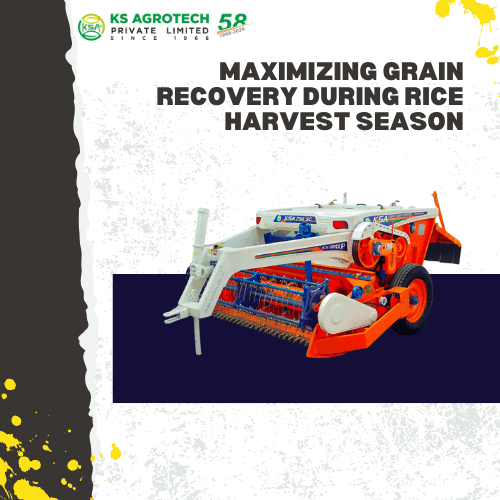
With efficient machines you have a uniform cutting height thus reducing the amount of grain left in the field. Equipment like a paddy reaper helps streamline the cutting process, allowing crops to be harvested quickly and cleanly, which directly contributes to improved grain recovery.
The increased labor dependency is also minimized through mechanization and this is particularly advantageous when there is a peak season where shortages of labor are usual.
To minimize losses, it is important to maintain the right cutting height. Excessive cutting can leave behind invaluable grain producing stalks in high cutting whilst overly low cutting might bring in unnecessary straw and water into the harvested crop.
Machinery is well adjusted to result in regular cutting and minimization of wastage. The implementation of equipments should be done regularly with farmers personally inspecting and calibrating them so as to ensure that they perform optimally throughout the harvest period.
Another phase that the grain recovery may be enhanced or reduced is threshing. Failure to use proper threshing techniques can result in cracked grains, failure of complete separation, and other loss.
Efficient threshing equipment will also be used to ensure that the grains are separated in a thorough way without breaking down a lot. The machine parameters like the drum speed and concave clearance must be changed based on the crop conditions to recover to the highest.
Threshing does not only increase the yield of the grains, but also has the effect of improving the overall quality of the grains, which boosts the value of the grain in the market.
Water control plays a key role in the conservation of grain that is harvested. The presence of high levels of moisture may lead to fungal growth, spoilage and losses in storage. Rice is supposed to be dried to safe moisture content after harvesting then stored.
Drying under the sun or using the mechanical dryer can be used to reduce the moisture levels. When the grain is dried properly it does not deteriorate and the grain can be stored safely over a long time.
Wastage of grain may happen during harvesting and also in the process of transit and handling. Here, inattentive loading, spillage, and incorrect stacking are probable to have a lower recovery.
Wastage is reduced by using proper containers, good transportation procedures and storage facilities that are clean. The farmers are recommended to make sure that harvested rice is gathered in time before it is exposed to rain or pests.
Properly kept equipment is also important in the recovery of grain. Old, worn out blades, loose belts, or poorly adjusted parts can add to the losses and decrease the efficiency.
Preventive maintenance is performed during the harvesting season and before to maintain a smooth running. Making sure that the lubrication is sufficient, fixing moving components, and changing damaged components will reduce the occurrence of sudden breakages during significant harvesting seasons.
However, despite the use of sophisticated mechanical devices, training of the operators is required. Proficient operators know how to adjust machines, crop and field characteristics. Their experience will guarantee the best performance of machines and minimum losses of grains.
Training of operators is also a way of ensuring high efficiency and getting the best possible harvest outcome.
Enhancement of grain recovery results in improved yield in the short run and also enhances the profits in the long term of the farm. Less wastage equates to increased marketable produce, increased income stability and better use of the resources.
The turnaround time between crops is also reduced by means of efficient harvesting, and this gives farmers the opportunity to prepare the fields in time to begin another harvest. This helps in enhancing productivity of land and general sustainability of the farm.
To achieve maximum grain recovery during the period of rice harvesting, each of the following activities has to be performed: timely operation, use of appropriate equipment, moisture control and handling. Farmers can also make considerable losses and improve profitability by targeting each of the phases, such as the cutting and storage.
Modern harvesting methods, equipment upkeep, and competent working are some of the measures that ensure that the crop fully achieves its value. Planned and well executed rice farmers will be able to experience a better yield of the harvest and quality, as well as an increase in the economic gain in each harvest.