- October 15, 2026
- By: admin
- in: Uncategorized
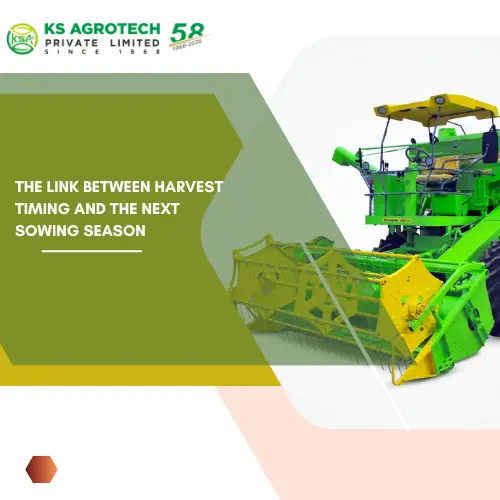
Harvest is not the end of one farming cycle. It is also the beginning of the next one. Once a crop is removed, farmers have a limited amount of time to clear the field, manage leftover residue, prepare the soil, and get ready for sowing. Delays during this period can affect the next crop and increase pressure on labour, machinery, and time.
A timely harvest gives farmers more control over what happens next. When harvesting is completed at the right stage, the field can be prepared without unnecessary delays. However, late harvesting can leave less time for field preparation and may push the next sowing closer to its ideal window.
This is why planning should begin before harvesting starts. Farmers can arrange equipment, labour, and other resources in advance so that field preparation can begin soon after the crop is removed.
In many farming systems, the period between harvesting one crop and sowing another is quite short. Farmers may need to remove or manage crop residue, prepare the soil, and complete several other tasks within a limited number of days.
This is where a super seeder can become part of a faster field management approach. Instead of treating residue management and sowing as completely separate activities, suitable machinery can help farmers make better use of the available time.
Crop residue can cover large areas after harvest. Burning it is harmful to the environment, while manual removal can require considerable labour and time. Farmers therefore need practical ways to manage residue while preparing the field for the next crop.
A super seeder machine can help combine residue management with sowing in suitable conditions. This can reduce the number of separate field operations and help farmers move from harvesting to the next stage more efficiently.
Not every farm has the same field size, tractor capacity, soil conditions, or crop cycle. Equipment should therefore be selected according to actual requirements rather than simply choosing the largest or most expensive option.
For example, farmers comparing the KS Super Seeder 7-foot weight should also consider tractor compatibility, field conditions, working width, and transportation requirements. These factors can affect how easily the machine fits into an existing farming operation.
A machine can only perform effectively when it works well with the tractor and field conditions. Before purchasing equipment, farmers should check horsepower requirements, working width, operating depth, and the type of residue normally found in their fields.
The best tractor for super seeder applications depends on the specific machine, soil conditions, and workload. Matching the tractor and implement properly can help reduce unnecessary fuel use and improve overall field performance.
Harvest timing also affects machinery demand. During busy periods, many farmers need similar equipment at the same time. Waiting until the last moment to arrange machinery can create unnecessary delays.
Farmers can avoid some of these problems by planning their equipment needs early. Working with a reliable super seeder manufacturer in India can also help farmers understand machine specifications and select equipment suitable for their operations.
Farming requirements can differ considerably between regions. Soil, crop patterns, field sizes, weather, and available machinery all influence how quickly a field can be prepared.
For farmers in Punjab, choosing the best super seeder in Punjab should involve more than comparing prices. Local field conditions, tractor availability, residue levels, and expected workload should all be considered before making a decision.
Cost is naturally important when purchasing agricultural equipment. However, the cheapest machine may not always provide the best long-term value. Farmers should consider durability, maintenance requirements, operating capacity, compatibility, and expected working hours.
When comparing the super seeder price in Punjab, it is useful to look at the complete cost of ownership rather than focusing only on the initial purchase price. Fuel, repairs, maintenance, and productivity can all influence the final value.
Good planning connects every stage of the farming cycle. Farmers who know their expected harvest date can estimate how much time they have for residue management and field preparation.
A suitable super seeder can become useful when the goal is to shorten the gap between harvesting and sowing. However, farmers should still consider their crop rotation, soil condition, weather, and available labour before deciding how to manage the field.
The manufacturer can also play an important role in the buying process. Farmers may need guidance about machine specifications, tractor requirements, maintenance, and field performance.
A super seeder manufacturer in Punjab may provide useful insight into regional farming conditions and help farmers understand which machine configuration is appropriate for their fields.
Efficient farming does not depend on one machine alone. Harvesting equipment, residue management tools, tractors, and other implements all need to work together as part of a wider system.
For larger agricultural operations, working with reliable combine harvester manufacturers in Punjab can also support better planning during the harvesting stage. When harvesting is completed efficiently, farmers gain more time for the next steps.
The connection between harvest timing and the next sowing season is simple: every lost day can make the next stage more difficult. Better planning, suitable machinery, and timely decisions can help farmers use this short window more effectively.
The goal is not simply to finish harvesting quickly. It is to create a smooth transition from one crop to the next while protecting time, resources, and productivity.