- October 15, 2026
- By: admin
- in: Uncategorized
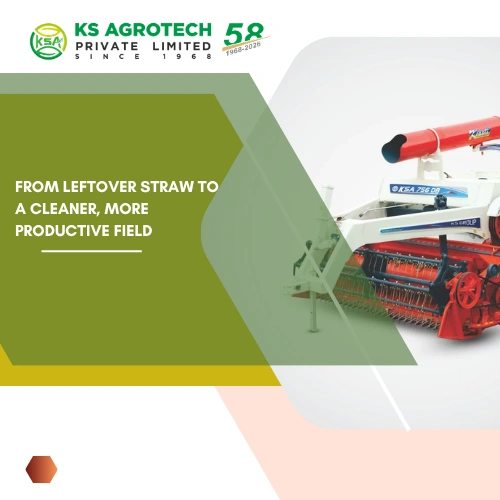
Following the harvesting process, straw residues can present a serious problem for farmers. Depending on the crop, large amounts of crop residue can remain spread over the field, with subsequent operations becoming more difficult and lengthy in preparation. Proper residue management can leave farms cleaner, while increasing overall productivity.
A modern solution to this problem is to use equipment such as a Straw Reaper. A Straw Reaper is used to gather, crush, and press straw into bales, avoiding the labour-intensive task of doing this by hand.
Crop residue can complicate tillage, sowing and other operations. In conventional systems, straw often had to be gathered manually or manipulated using labour-intensive methods, which can be expensive and/or difficult due to the availability of labour.
Mechanized straw handling enables farmers to handle the residue more efficiently and thoroughly. An appropriate machine can chop and gather up residue, thereby decreasing time and labor for clearing the field after harvest.
A straw reaper of today can be installed on an articulated tractor and handle residue quickly and easily. With different working widths and different technologies used, it can pick up, chop, and distribute straw in a controlled manner depending on the specifications.
Some important benefits include:
Farmers should use a range of criteria to compare equipment, including tractor compatibility, working capacity, build quality, efficiency of maintenance, and operating conditions, rather than the purchase price alone.
The various crops and cropping situations need different types of farm machinery. In paddy-growing areas, a paddy straw reaper is very useful for handling straw after harvesting.
In addition, a Paddy straw chopper can also be used as a viable solution for farmers who need to chop paddy residue into pieces. But if the residue is the only thing to be processed, the Paddy chopper should be used.
To get a better idea of the equipment, one has to recognize the distinction between harvesting equipment and residue-management equipment. For instance, a Paddy reaper mainly belongs to the first type, while straw-processing equipment is related to the latter.
It is advisable for farmers to consider the transmission and operating mechanism during equipment selection. For example, a reaper with a multi-speed gearbox might be suitable for various operating conditions.
A Straw reaper equipped with a multi-speed gearbox might enable the operators to choose the most appropriate working speed based on the field conditions and the tractor’s capabilities. Different constructions, for instance, a reaper with a rotavator-type gear, are implemented with specialized mechanical setups intended for optimal working efficiency.
Farmers seeking ease of operation can opt for a reaper without pulley change, subject to the tractor/ machine combination.
The expenditure necessary to acquire agricultural implements depends on the details, size, make, construction quality, and accessibility of features. Thus, it is imperative that one should compare various outputs before purchasing.
In order to analyze the straw reaper price, it is important to take into account the other costs involved, such as consumption of fuel, replacement part availability, servicing, and technical support available from the producer.
Pricing of the Straw Reaper Machine in India can differ greatly depending on the machine type and the make of the Reaper. It is advisable for buyers to solicit quotations and study the specifications for a better understanding of the pricing information.
Regional pricing may also vary. For instance, the Straw reaper price in Punjab might vary according to vendors operating in a specific region, transport charges, feature specifications, and seasonal requirements. The same applies to the Straw reaper price in India; comparing the prices of multiple suppliers helps farmers find a suitable machine per their budget.
Effective straw management is more than just collecting and disposing of undesired residue. With the correct processing, crop residues (such as straw) can be valuable as biomass, as a source of animal feed, or for other agricultural uses, depending upon the quality and local need.
Investing in the right equipment and implementing residue-management practices will enable farmers to reduce the time required for post-harvest cleanup and keep fields easier to work up for the next crop.
A less cluttered field can lead to easier farming and more efficient harvest in the following year. When choosing the equipment, it is important to think about the Crop, tractor compatibility, the state of the field, machine functions, spare parts availability, and operating expenses.
If you are a farmer or agricultural scientist searching for trusted Agricultural Machinery options, KS Agrotech offers relevant details and information on equipment that caters to contemporary farming needs. Visit https://ksagrotech.org to find more on agricultural machinery as well as options for effective crop-residue removal.