- September 16, 2026
- By: admin
- in: Uncategorized
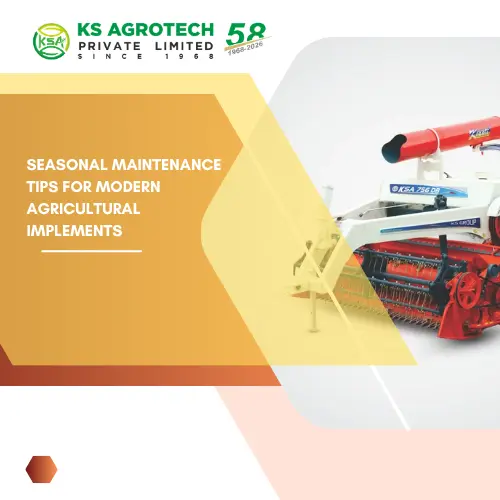
Today’s agricultural implements are a boon to farmers by adding to productivity through greater efficiency with less manpower usage and thereby getting the work done quickly in the fields. Any new machinery shall work uniformly well if serviced from time to time during the off-season. This reduces downtime and increases life of equipment, lowers operating costs and affords good mileage.
Preventative maintenance—cleaning, lubricating, replacing worn parts and inspecting major systems—should be incorporated into every farmer’s yearly schedule, whether the tractor is used for land preparation, residue management or sowing. Performing this maintenance with each new season will prevent costly repairs during peak farm time.
This publication details key types of seasonal maintenance that can contribute to efficient operation of agricultural implements across the entire growing season.
Farm machinery must work in tough environments such as dust, moisture, cropping residue, rough terrain and heavy workloads. These conditions take a toll on the mechanical parts of the machine and lead to loss of efficiency.
Regular seasonal maintenance helps farmers:
Proactive upkeep costs a lot less than reacting to accidents in peak farming season.
Cleaning equipment after each harvesting season is one of the easiest but most practical management practices.
Residue, soil, moisture and dust build up around moving parts and become rusted, corroded and have excessive wear.
Areas that require careful cleaning include:
Clearing away debris also simplifies checking the equipment through existing damage ahead of the upcoming season.
Inside every tool there are parts which move and also several parts with constant friction.
Before using equipment again, inspect:
Quickly replace any worn or damaged components instead of leaving them on the machine until it fails in the field.
Lubrication eliminates friction and reduces the amount of wear and tear.
All recommended lubrication points should be greased before the start of each season during machine servicing.
Proper lubrication helps:
Always use the manufacturer-recommended grades of lubricants.
Agricultural hydraulic systems are vital to ensure the effective operation of various implements.
Inspect:
Leaks should not be overlooked. Low hydraulic pressure causes the machine to work less efficiently and can result in costly component damage.
Tyres are very important to the stability, grip and fuel consumption of the machine.
Before every season:
Regular tyre care enhances in-field results and avoids excessive fuel consumption.
Power take-off. The success of implements connected to tractors relies much on fluid power transfer.
Inspect the tractor and implement together by checking:
Having everything correctly aligned will eliminate vibration and maximize operating efficiency.
Any farmer choosing the best tractor for super seeder should choose the tractor that has more HP and hydraulic flow capacity at the time of working in the field.
Proper storage will prevent deterioration due to exposure to weather.
Follow these storage practices:
Ensuring correct storage minimizes corrosion and prolongs service life.
Quality equipment typically needs fewer repairs and results in better field efficiency.
When purchasing machinery, farmers should evaluate:
Prior to choosing equipment that best suits their plantation, it is not unusual that several farmers test the super seeder against various other residue management implementing machines.
Others may also prefer the super seeder machine specifications to know the working width, compatibility and efficiency of operation.
Prior to selection, most farmers evaluate the best super seeder models in terms of durability, efficiency in field use and ease of maintenance.
Farmers in North India commonly look for the best super seeder in Punjab as there is a long history of residue management practices in the state.
In the same way, many farmers compare possibilities while choosing the best super seeder in India to guarantee an investment in equipment that lasts.
An individual looking at the specifications of the machine can also look at the KS Super Seeder 7 feet weight to see if the tractor can lift it under given field conditions.
Consumers often prefer to buy directly from an experienced super seeder manufacturer in India that provides reliable after-sales service and genuine spare parts.
Similarly, many farmers choose a trusted super seeder manufacturer in Punjab because of the strong agricultural machinery industry and extensive dealer network.
Even with correct operation, poorly maintained equipment cannot have a long machine life.
Operators should understand:
Skilled operators minimize excessive wear and increase the efficiency of the entire equipment.
Performing maintenance on equipment all year round is vital for modern agriculture. The benefits of maintaining the apparatus on a regular basis in terms of inspection, cleaning, lubrication, hydraulics, tyre maintenance and storage are evident by the increase in the overall efficiency of the machines, ultimately costing less money to repair.
Adhering to a regular maintenance schedule and purchasing quality farming equipment can ensure years of productive seasons for your machinery investment with fewer repairs and breakdowns.