- September 28, 2026
- By: admin
- in: Uncategorized
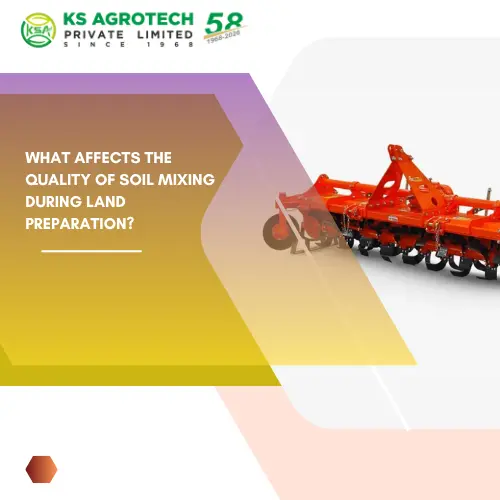
Mixing the soil in the field is an important aspect of land preparation, as it helps create the conditions under which seed germination, plant rooting, and overall crop growth and production can take place. Good land preparation incorporates the remaining crop into the topsoil, reduces large clods, and opens up the field for planting. But these operations depend on soil moisture, soil texture, depth of operation, settings of equipment, and the well-being of the machinery.
Knowing these details can allow farmers to accelerate the pre-emergence phase of the planting operation and minimize any additional machinery operating costs and time.
The texture of the soil will determine the effort needed to turn the land over and combine it. Deep sandy soil will be easy to turn, while soil high in clay can be sticky when wet and hard when dry. A good mix of drainage, moisture retention, and ease of use is often loamy soil.
Prior to planting time, prepare your field by surveying the field. The mixture of stones, packed areas, or residual buildup in the field can influence the settings of some equipment and the effectiveness of certain tasks. Selecting the most appropriate machine and working method will improve consistency.
A proper Rotary Tiller may turn up the upper soil layer to help break up crop residue, if conditions are right.
Soil moisture is one of the more critical factors that impacts mixing. Operating in very wet soil results in soil adhering to the blades and the formation of plug layers. In contrast, very dry soil may result in large clods being formed and the need to make multiple passes to obtain a good finish.
The field needs to be at an acceptable moisture content before it can be worked. The optimum moisture content is soil-specific and depends on the amounts of recent rainfall and irrigation, and the crop being grown.
Timing also affects the ease of soil tillage and possibly fuel economy. It also affects soil conditions for root development and water movement.
Working depth – the depth at which the soil is loosened and mixed is critical. Working too shallow leaves uneven distribution of crop residue. If working too deep, it will potentially require more power and move more soil than is needed.
Working blades, even if they are sharp, can also influence the efficiency of work. If they are dulled, bent, or otherwise damaged, they can lead to uneven working and a greater load on the tractor. So check and change them promptly.
The farmer can determine the depth according to the demands of the crop, soil conditions, and seedbed requirements. Better than raising the depth several times, which can be used to change the mixture.
The speed of operation affects how well the equipment crushes clods and incorporates residue. Too fast an operation can leave uneven results in the field, whereas too slow an operation can cause additional time and fuel use.
A Rotary Tiller for a tractor should be in accordance with the rating of available horsepower and should be used as per the manufacturer’s recommendation. Proper matching will help in maintaining uniform performance and avoid overloading the tractor.
They should also check the implement’s working depth and recommended power, and make minor adjustments if necessary to meet the conditions of the field.
Each discipline has specific preparation needs. The need for machinery should be dictated by soil texture, field size, residue and crop and the tractor that is present on the farm.
A machine used for the loosening and mixing of the upper layer of the soil along with manure residues and for preparing the field for sowing. The operational efficiency of a rotary tiller depends on its design, layout of its blades, working width, and field suitability.
Farmers should determine the one job they do most often and consider the machine that would be the best fit for their typical field conditions, which would also increase overall consistency and eliminate potential areas of difficulty in operation.
The width of ground covered in one pass may be decreased by wider implements but will also require a larger tractor power and good field conditions.
The Rotavator 8-foot price is another aspect for farmers of larger models to look at in addition to power compatibility, build quality, and performance. Practical requirements of the farm should always be the ultimate deciding factor in either working width.
You may need to adjust for smaller fields, limited access, and less horsepower. The size of your tillage equipment is crucial in keeping your equipment operating efficiently without sacrificing the quality of soil tilth.
Periodic inspection can prevent mechanical issues that could impact field performance. Loose fasteners, transmission parts that are damaged, dull blades, and improper adjustments can all cause uneven mixing or lost time in the field.
The Rotavator Parts should be checked by the farmers prior to every important operation and scheduled for servicing as per the manufacturer. Timely replacements of different Rotavator Parts can provide a trouble-free working experience to all farmers.
Additionally, routine cleaning of the machine and inspection of key areas after use can help to spot emerging issues before they turn into costly repairs.
Estimate the cost of any agricultural implements needed in comparison to the estimated efficiency, lifespan, and maintenance of those items. The Rotavator Price 7 feet can be compared to other efficient implements to give a farmer an idea of what is available for their size of tractor and field.
Likewise, those interested in the cost of the Rotary Tiller must also look at the specs, build, aftermarket support, and compatibility of the piece of machinery.
Prices may also differ based on working width, design, materials, and features. When comparing the cost of the Rotary Tiller, consider machines with similar features. What buyers may see as the lowest cost may not be the same price for others.
The total cost of the purchase may also be limited by regional availability. Consumer investing to purchase the Rotavator Price India must take transportation, spare components and after-sales support into account if they are available.
Local support can prove particularly useful in the agricultural areas during busy sowing season. Along with product specifications and service availability, the Rotavator Price in Punjab can help farmers arrive at the most informed buying decision.
Referring to an experienced Rotavator Manufacturer for additional information can help you in assessing technical specifications, tractor suitability, and maintenance specifications of various models.
Good soil mixing can often be achieved without a high degree of tillage. Tillage is not universally good and can reduce soil stability, soil infiltration capacity, and increase moisture loss, especially in conditions where crusting can occur. It should be a quality seedbed for the species being grown.
Before starting each pass, farmers should check the field so they are not completing the same task over and over again. A few careful steps can help prevent over-disturbance, save time, and prevent excess fuel consumption.
Soil mixing quality is influenced by the soil category, the working depth, the soil moisture, and the working tool grade. One’s work depends on the tractor speed, the working tool quality, the equipment used, and its proper adjustment.
Land preparation techniques practiced as a result of field inspections and judicious machinery use and operation will result in more uniform crop stands and enhanced efficiency of machine use. Proper equipment use practices and implementation of appropriate land preparation practices will enhance the crop establishment process and minimize machine wear, field operations, and fuel consumption.