- October 8, 2026
- By: admin
- in: Updates
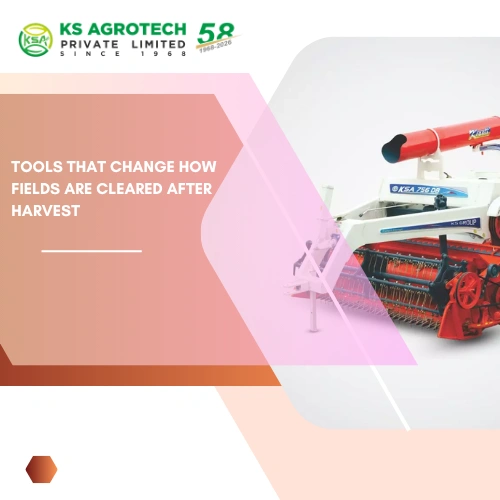
After harvest comes residue. Fields remain filled with leftover plant material such as straw and stubble once crops are removed. Without proper handling, these remnants may harm future planting cycles. Soil health risks decline under poor cleanup practices. Operational difficulties also tend to rise. Efficiency improves when tools clear debris effectively. One such machine steps into that space – the Straw Reaper. It prepares ground surfaces for what follows. Clearance becomes faster, more reliable. Farming workflows benefit behind the scenes.
With careful handling of leftover plant material, less time is spent preparing land while soil condition slowly strengthens, leading toward better yields. Equipment now seen more often in fields allows farmers to clear crop remains efficiently, leaving ground suitable for planting without waiting longer than needed.
From fields once cleared by hand or flame, new challenges emerge. Smoke rises when stubble burns, troubling air quality. Human effort takes hours, demanding strength and patience across wide plots. Machines now step where workers once stood, moving through rows with steady rhythm. One such tool, the Straw reaper machine, gathers what remains after harvest without delay. Efficiency arrives not in bursts but in continuous motion, turning waste into managed output. Instead of ash, there is order – bundled stalks ready for next steps.
Operating in one step, these machines handle cutting, threshing, plus cleaning of leftover material. With reduced need for workers, they allow useful outputs such as straw to serve again, either as animal feed or alternative applications.
Performance, alongside build quality, shapes how well farm tools function over time. With a reliable straw handler, harvests keep more grain instead of losing it during processing. When comparing units, capability matters as much as smooth running and simple handling for those working fields.
Should cost matter, attention often turns to Straw Reaper Machine Price In India, guiding choices without sacrificing function. A build that lasts, paired with steady operation, leads to reduced expenses over time, season after season.
One reason equipment costs shift lies in regional differences, market needs playing a role too. Take the Straw reaper price in punjab – its cost shaped by strong local need along with closeness to production centers. Because farming dominates there, selection expands where prices adjust under pressure from supply patterns.
Just like elsewhere, those who grow crops check what straw harvesters cost in India before choosing one. Pricing often shifts based on how well-known the maker is, how much the machine can handle, along with support offered later.
Although price matters, attention often shifts toward long-term benefits instead of immediate expense. Differences in Straw reaper price exist between versions; however, spending more at first on a durable model tends to reduce repair needs later. Efficiency improves gradually when equipment quality increases, even if the starting cost feels heavier.
A single correct choice in equipment cuts delays, lowers maintenance costs, while keeping work flowing when demand rises. Such reliability becomes essential for farms aiming at higher output without added financial strain.
With improved methods for handling crop leftovers, cleaner air follows. Soil condition rises when machines replace open fires in fields. Instead of burning, what remains may become livestock food. Income grows quietly through these quiet shifts in routine. Farmers find value where waste once lay.
Well-designed equipment lowers fuel needs while decreasing reliance on manual work, leading farms toward lasting economic and environmental balance over time.
Choosing a suitable machine involves multiple aspects, including how large the farm is, what crops are grown, one’s financial limits. Consideration often begins with these elements
When assessing tools closely, suitability for present and later agricultural demands becomes clear. Equipment selected through scrutiny adapts well to evolving field tasks. Future readiness emerges when choices are made with attention. Long-term fit grows out of thoughtful analysis today. What works now must also align with what lies ahead.
Despite steady progress, farming tools grow steadily smarter each year. Not only do modern designs simplify tasks, yet they also boost daily output. With time, emphasis may shift toward lighter ecological footprints alongside stronger performance gains.
As attention shifts toward eco-friendly agriculture, interest in updated methods for handling crop leftovers should grow sharply. Despite past hesitation, clearer benefits are now shaping stronger preference for advanced solutions across fields.
After crops come off the land, clearing what remains becomes essential for future planting cycles. Efficiency in managing leftover plant matter shapes how smoothly farming progresses today. The Straw reaper price in India stands among considerations that shift old methods into something faster, less demanding on workers. Because of such machinery, completing tasks takes fewer hours while output rises steadily across farms.
Because they recognize elements such as efficiency, cost, along with lasting benefits, growers reach choices supporting farm function alongside ecological balance. With proper equipment selected, field cleanliness improves, earth regains strength, harvest outcomes rise ahead.