- October 8, 2026
- By: admin
- in: Updates
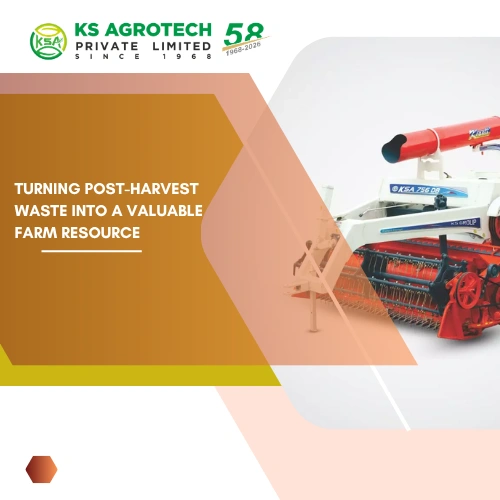
Harvesting is one of the most hectic processes in the life of the farm, but the job doesn’t stop once they’ve harvested the crop. Tremendous expanses of straw and other crop residues can be left lying across the field – a job that the farmer will have to perform in order to prepare the field for the next set of crops. Collecting that straw effectively will prevent time wastage, prevent redundant fieldwork, and turn waste into a worthwhile resource.
Today’s farm machinery provides farmers with better options for managing their straw. Using the right machinery is just one way farmers can keep cleaner fields and speed up collections.
Keeping crop residue out of the fields can present its own problems. In fields with heavy amounts of straw, it can get in the way of future land preparation efforts, and it can make some tasks more difficult to complete or require a second pass with farm equipment.
In the past, farmers have employed various techniques for clearing or utilizing this material. These practices, while effective, can demand significant labor, time, and fuel. With the emphasis shifting towards greater productivity and resource efficiency, equipment meant for handling crop residues is becoming more significant.
A Straw Reaper could potentially be helpful in this scenario, as it is made to help gather remaining straw post-harvest, rather than simply discarding crop residue as trash.
Straw may be of value other than in its field status. The material may find a use in animal bedding, fodder-related uses, composting, biomass use, or other uses, according to the particular crop and local needs.
Gathering would also make these ideas even more feasible. Instead of letting the valuable compost blow off to the sides of the plot, farmers could pick it up in an easier form.
It is even more so in countries with high levels of crop residue production. Improved management can minimize the amount of material that the farmer has to manage in the subsequent tillage operation and at the same time offers the chance for more effective utilization of the harvested crop residue.
Therefore, acquiring the equipment you will need to use takes careful consideration, rather than just the purchase price: Farm size, crop, amount of residue, tractor size, conditions of use, required maintenance and number of users.
Consider working capacity and building when selecting a straw reaper machine. If a machine operates ideally on the farm, it can achieve better performance and productivity than one based on a lower price.
Consider how often the machinery will be used, as for routine work the long-term ownership cost can be greatly affected by the item’s strength and maintenance requirements.
Cost is obviously a major factor when selecting farm machinery, but spending less on initial purchase does not necessarily represent the cheapest option in the long term.
Straw reaper price should reflect the quality of the machine, specification, build, and features. When considering Straw reapers, you should compare the prices and specifications of all machines against your everyday requirements.
Operating costs are an additional aspect to take into account. Fuel use, maintenance, working time, spare parts, service, and estimated life span are drivers of the actual value of an investment.
The cropping and farming techniques across the country are quite diverse. Diverse types of soils, varied types of cropping systems and allocation of lands is one of the factors which need to be considered in variation of machinery as per the conditions.
Farmers who would like to buy should consider specifications from different manufacturers and dealers before investing. Parameters to look for include capacity, cutting and collection, tractor horsepower, and after-sales service.
A strong service network can be very important, since equipment may need to be serviced throughout the long harvest season. Having up-to-date spare parts and technical support can also reduce downtime.
Punjab has an agrarian economy and is characterized by intensive farming of crops like wheat and paddy. Since high amounts of residue can be produced while harvesting, the case for residue management is especially relevant in Punjab.
Things to think about when looking for Straw reaper price in Punjab, India Local dealer presence, transportation cost, horsepower, capacity, quality of service support; A machine that can be serviced easily by a dealer in or near the area often is more valuable.
Farmers might also like to chat to other machinery users in their local area. Watching machinery being used on the ground can give a different perspective to the information provided by equipment dealers or media.
It is more appropriate to consider farm equipment not as an additional expense, but as a productivity tool. The farm equipment value depends on the kind of work that it can undertake and the amount of saving in time and effort it can provide.
While the value of a straw reaper in India is being determined, farmers must go ahead and estimate the return it can give over the mean operating season. All these push down the field-operation time and reduce manual work; it will hasten the collection process and profit yields from straw.
Considering seasonal use is also logical. Any machine that performs well during the right time of harvest has the potential to allow the farmer to get through field finishing earlier, a useful thing if the next crop has to be sown in a short time.
Modern farming pays increasing attention to straw management. The question is no longer ‘what should I do with the straw?’ but rather ‘how should I properly collect and manage the straw?’
Equipment can be used to bring this task into some order and enable the mechanic to clear the fields more easily. However, the machinery items must be the right ones to use, and selection should be according to the actual farm needs, workability, compatibility, service support, life cost….
In the end, you can think of managing residue as simply making the transition between one crop and the next more gradual. Through judicious harvesting, maintaining quality, and doing less field preparation, you are utilizing resources that are already on your farm more effectively.
Don’t just think about getting rid of post-harvest residue; think about how you can revalue that residue and handle it more efficiently. With some imagination and the right tools, post-harvest residue can be integrated into the system to reduce wastage.